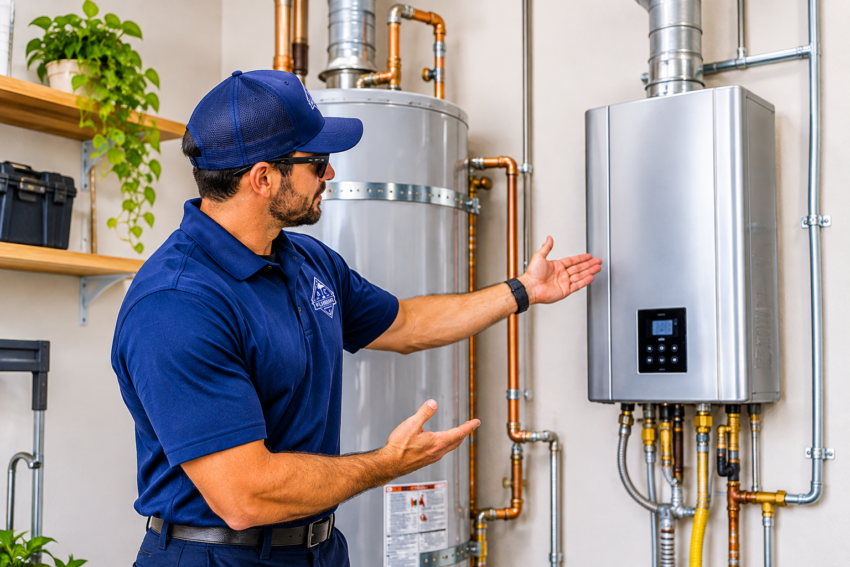
Tankless vs. Traditional water heaters: what you need to know
The selection process for a brand-new water heater is One of many decisions that every homeowner will need to make. There are several aspects to consider other than the original price of each model. These include: energy efficiency, hot water demand, install cost, maintenance, and lifespan. All of these factors should be taken into account when deciding whether to select a tankless versus a traditional water heater. Both types of systems provide reliable hot water; however, they function very differently. Understanding the positives and negatives of both will assist you in selecting the correct plumbing system for your home.
How does a traditional water heater operate?
A traditional water heater (also referred to as a storage tank water heater) Heats and holds water within an insulated container. Residential units typically contain between 30 and 80 gallons. In addition to holding the water at the predetermined temperature, this type of system maintains the stored water temperature until a faucet is opened allowing the stored hot water to flow. This is why there is always hot water available during normal use such as showering, doing laundry etc.
Positive attributes of traditional water heaters:
– lower initial cost: generally cheaper to buy and install.
– easy to operate: due to its widespread availability, most people know how to perform basic maintenance tasks.
– provides consistent hot water supply: as previously mentioned, the stored water is used for normal household activity use (showers, washing clothes).
– available with multiple fuel types: depending upon your preference you can obtain either an electric or natural gas powered model.
While traditional water heaters have numerous benefits, they have some negative features. For example, once the stored hot water has been depleted, the tank needs time to heat up additional water. Stand-by heat loss is another disadvantage due to continuous heating of stored water.
How does a tankless water heater function?
Unlike a traditional storage tank style water heater, a tankless water heater (often referred to as an on-demand water heater) uses no storage tank. Instead of storing heated water, this type of system Heats the water as it flows through the system.
Once a hot-water faucet is activated, cold water enters the system where it passes through a heat-exchange chamber. It then is warmed-up by a gas flame or electric element prior to being sent through the piping system to activate the appropriate hot-water appliance (shower head, sink etc.).
Advantages of tankless water heaters:
– continuous hot water supply: as stated above, the water is heated on-demand and never stops flowing (as long as the power source remains active).
– Space-saving design: the compact Wall-mount design provides ample free-Space around the water heater area.
– less Standby heat-loss: because the system does not constantly maintain stored hot water, there is significantly less lost heat.
– longer lifespan: many tankless units can potentially exceed 20 years provided regular maintenance occurs.
There is One major drawback regarding flow-capacity: a tankless system must be correctly sized to support simultaneous hot-water use throughout your entire home.
Tankless vs. Traditional water heaters: major distinctions
Now let’s review the main differences between tankless and traditional water heaters.
Feature traditional tankless
Storage of heated water water is kept heated at all times no storage tank. Water heated on-demand
Cost of purchasing lower overall cost higher overall cost
Efficiency maintains stored hot-water at all times fewer Standby losses due to reduced amount of wasted heat
Space requirements takes up floor Space compactly mounted on walls
Supply of hot-water Limited by the volume of stored hot water flow-capacity limits access to hot water
Average life expectancy approximately 10 – 15 years average 20+ years
Maintenance frequent cleaning and inspections Descaling and occasional service
As with anything else, actual performance and longevity are dependent upon various factors such as model, installation, quality of incoming water, and maintenance practices.
Is One type more energy efficient than the other?
Due to Standby heat-loss inherent with traditional water heaters (which continue to heat the stored hot water), tankless systems are capable of reducing waste by heating only what is required at that moment.
According to the u.s. Dept. Of energy, for households consuming under 41 gallons per day, tankless systems can generate approximately 24% – 34% greater energy efficiencies compared to traditional storage tank-style units. However, since energy-efficiencies alone do not guarantee lower overall expenses for Homeowners (due to varying fuel prices and maintenance costs), comparisons can become convoluted based on individual circumstances.
Tankless vs. Traditional water heater installation costs
While traditional water heaters are generally less expensive initially (especially when replacing an existing tank with a similar model), tankless installations often involve additional labor requirements such as installing new gas lines, modifying electrical connections, venting systems, or altering existing plumbing.
Ultimately, your total installation expense will depend upon the specific equipment selected, installation-related costs associated with the equipment chosen, and current conditions of your home’s existing plumbing system.
Obtaining a professional plumbing evaluation will enable you to identify which option meets your financial constraints without neglecting essential installation considerations.
How do i determine which system best suits my household needs?
Your best option will ultimately depend upon your household’s needs.
If you desire a low-cost initial investment, consistent usage patterns for hot water, and familiarity with maintenance procedures, a traditional tank-style water heater would likely be suitable.
Alternatively, if you want to save Space, minimize Standby energy losses, and have hot water available without reliance on a storage tank, a tankless water heater could be well-suited to meet your needs.
Consider your family size, number of bathrooms, simultaneous hot-water usage patterns, available fuel supplies and future maintenance requirements prior to making a decision.
Professional guidance regarding water heater selection in Carlsbad CA
You don’t need to navigate this complex comparison on your own. The ideal combination of plumbing configuration, ongoing hot-water needs and budget should be determined after consulting with a knowledgeable plumber who understands the value of consistent hot-water availability for your daily routines.
Whether you’re planning to replace an old traditional tank-type water heater with a modern tankless unit or simply exploring alternatives for meeting future household needs, our experienced plumbers are here to guide you towards identifying an optimal solution for your home located in Carlsbad and surrounding areas.
Are you seeking assistance in determining which type of water heater will suit your needs? Please contact us today for consultation services about which product may be best suited for your specific application.